Architecture & Design
Tropical Architecture: Designing for Light, Air and Landscape
Discover the principles that make tropical residential architecture feel at home in Costa Rica, from shade and airflow to landscape and outdoor living.
2 min read
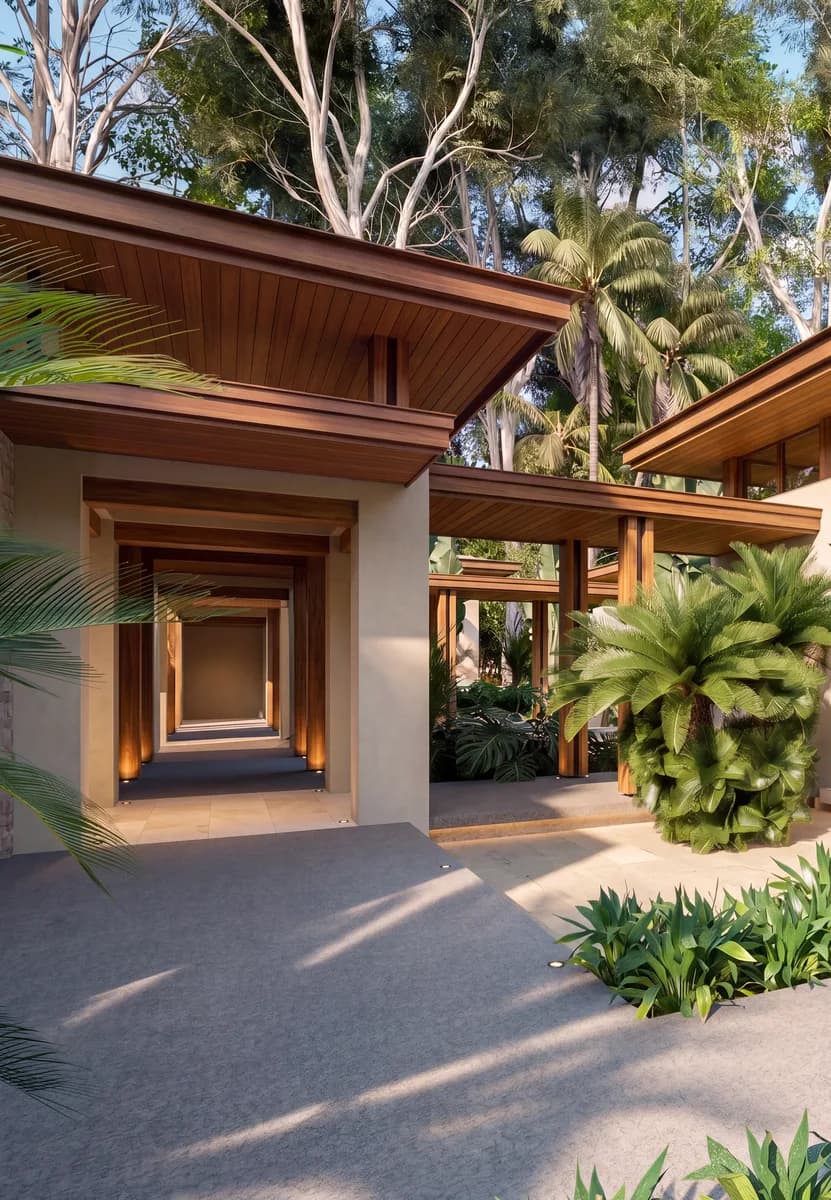
TROPICAL ARCHITECTURE: DESIGNING FOR LIGHT, AIR AND LANDSCAPE
A tropical home should not feel like a conventional house placed in a warmer climate.
The setting changes the way architecture is experienced. Sun, rain, humidity, vegetation, breezes and outdoor life all influence what makes a space comfortable and memorable.
That is why tropical architecture begins with response rather than style.
SHADE IS PART OF THE ARCHITECTURE
Strong tropical sunlight makes shade valuable. Covered terraces, roof overhangs, recessed openings and landscaped edges can create transitional spaces that remain connected to daylight without feeling exposed.
These shaded zones often become some of the most lived-in parts of the home.
AIR SHOULD HAVE A PATH
Openings, room relationships and covered exterior spaces can help a residence feel visually and physically connected to the outside. Mechanical cooling may still be part of modern living, but the architecture should not ignore the climate around it.
LIGHT SHOULD CHANGE THROUGH THE DAY
Natural light in the tropics is dynamic. Morning light, filtered garden light, reflections from water and the softer atmosphere of late afternoon can all become part of the interior experience.
The goal is not simply “more glass.” It is thoughtful light.
THE LANDSCAPE SHOULD FEEL CLOSE
A tropical residence becomes more convincing when gardens, pools and terraces are treated as spatial extensions of the home rather than leftover exterior zones.
That changes everyday routines. Breakfast moves outside. A door opens toward the pool. A hallway frames vegetation. Evening light becomes part of the social space.
TROPICAL LIVING IS NOT A STYLE.
IT IS A RELATIONSHIP WITH CLIMATE AND PLACE.
AT SUEÑOS DEL MAR
The residences are being developed around these relationships: indoor-outdoor living, private water, gardens, natural light and a visual connection to Costa Rica’s tropical landscape.
The strongest expression of the design will ultimately be the simplest one—when the home feels as though it belongs where it is.
Questions & answers
What makes architecture “tropical”?
It is less about a decorative style and more about how a building responds to climate, light, shade, rain, air and landscape.
Is indoor-outdoor living practical in Costa Rica?
Covered and shaded transition spaces can make outdoor living part of the daily experience while responding to sun and seasonal rain.
Does every Sueños del Mar residence use the same design?
No. The collections and models have different layouts while sharing a common relationship with tropical living.